Part 1 Planning for Stability: Support Options for BC Families in Transition—Why Financial Disclosure Matters
When a relationship ends, emotions often run high. But; fair and durable separation agreements are built on facts, not assumptions. In British Columbia, full and honest financial disclosure is the cornerstone of separation agreements involving property division, child support, and spousal support.
This first article of our two‑part blog series explains what financial disclosure is, why it matters, and what it typically includes. This is to help families make informed decisions and avoid any unnecessary conflict down the road.
Note: This article provides general legal information only and is not legal advice. Family law outcomes depend on individual circumstances.
Why Financial Disclosure is so Important
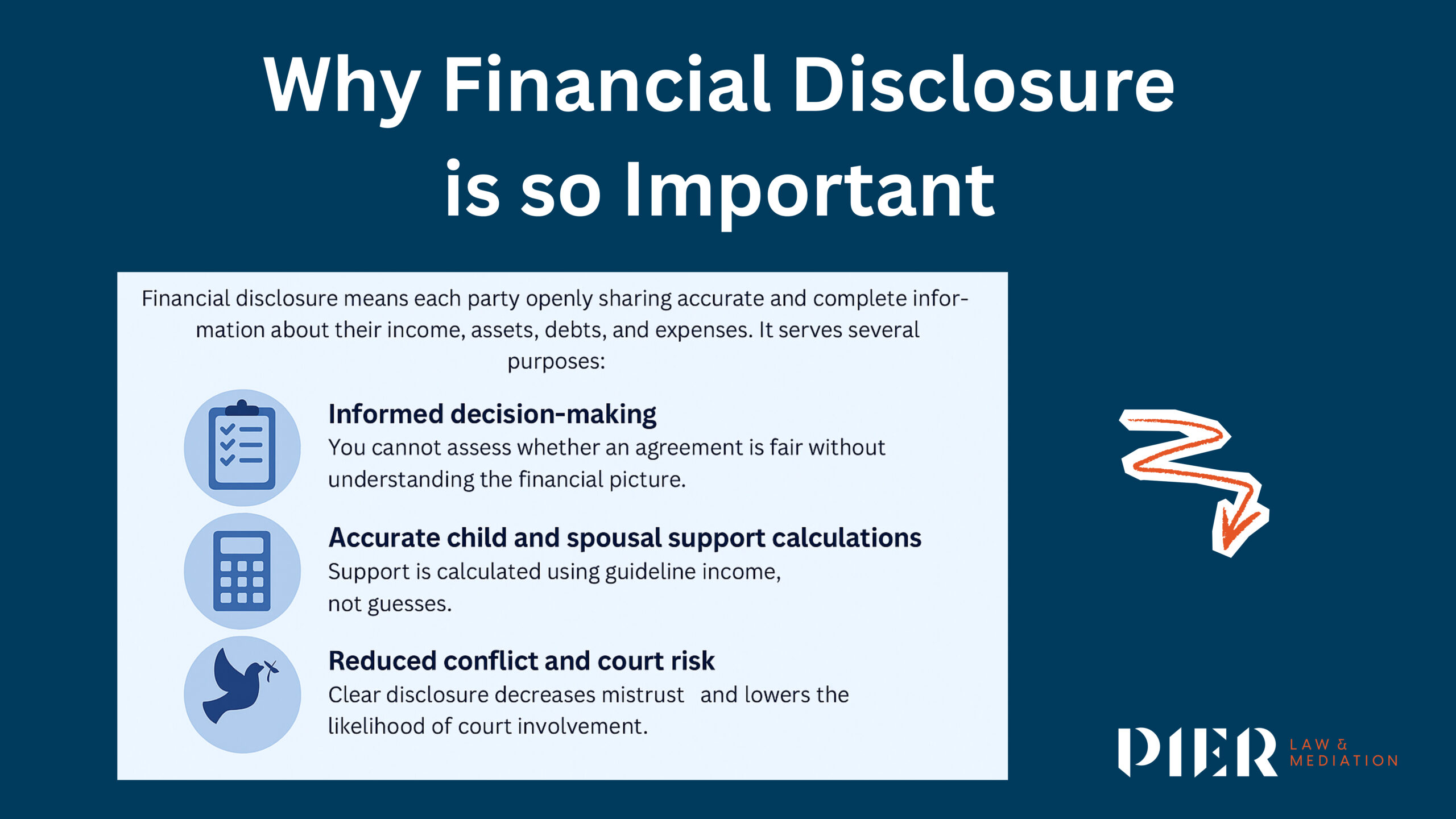
Financial disclosure means each party openly sharing accurate and complete information about their income, assets, debts, and expenses. It serves several essential purposes:
- Informed decision‑making:
- You cannot assess whether an agreement is fair without understanding the financial picture.
- Accurate child and spousal support calculations:
- Support is calculated using guideline income, not guesses.
- Reduced conflict and court risk:
- Clear disclosure decreases mistrust and lowers the likelihood of court involvement.
- Legally enforceable agreements:
- In British Columbia, separation agreements can be set aside if one party failed or fails to provide proper disclosure.
Put simply: an agreement based on incomplete disclosure is vulnerable.
Financial Disclosure and Separation Agreements in BC
Separation Agreements are private contracts. While courts generally respect them, they will not uphold agreements that were reached without full and frank disclosure.
Under BC family law principles, each party has an ongoing duty to disclose material financial information, especially where children or long‑term support obligations are involved.
Many disputes arise years later, not because an agreement was unfair at the time, but because critical financial information was missing.
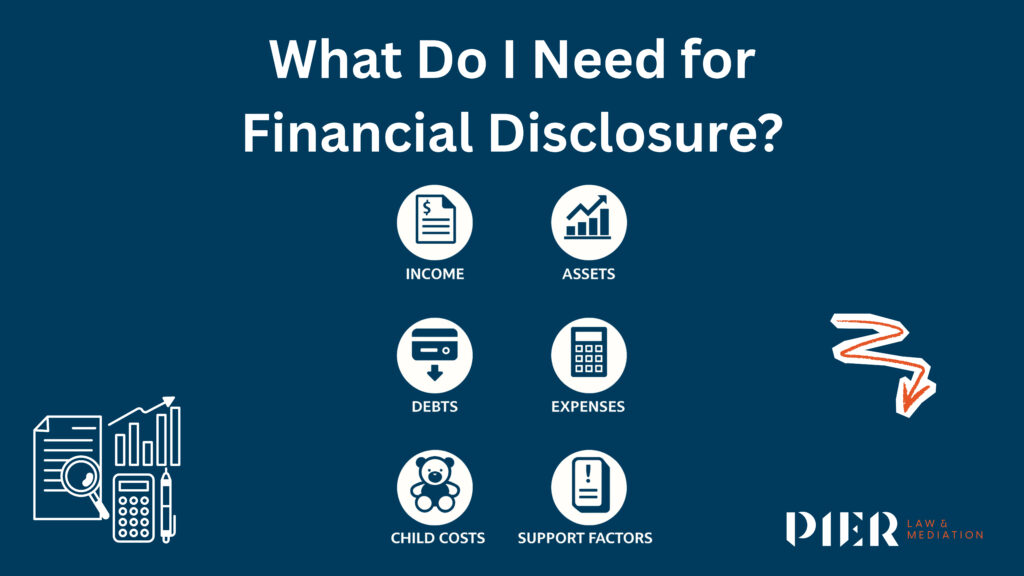
What is Typically Included in Financial Disclosure?
While the exact requirements can vary by situation, most separation agreements in BC rely on a structured disclosure process. Below is a general checklist commonly used in family law matters.
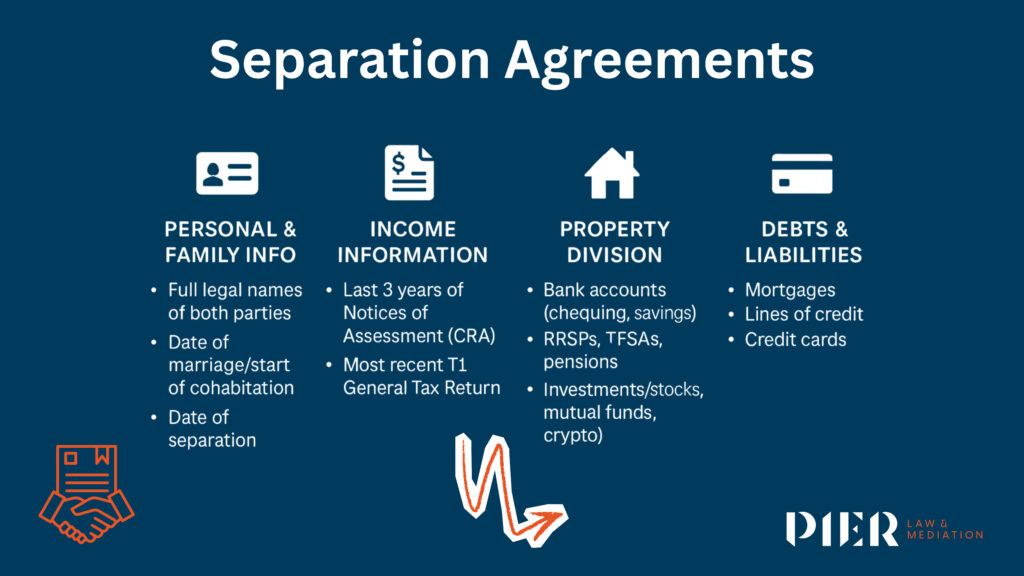
- Personal and Family Information
- Full legal names of both parties
- Date of marriage or start of cohabitation
- Date of separation
- Names and birthdates of children
- Income Information
(Usually the most recent year, plus historical context)
Commonly requested documents include:
- The last three years of CRA Notices of Assessment.
- Most recent T1 General Income Tax Return.
- Recent pay stubs (typically the last 3 months).
- Employment contracts or offer letters, if applicable.
- Records of self‑employment or business income.
- Details of government benefits (EI, CPP, disability, etc.).
Some situations require more extensive income history, especially where income fluctuates, or one party is self‑employed.
- Assets and Property
(Owned individually or jointly) This may include:
- Bank accounts (chequing and savings).
- RRSPs, TFSAs, pensions.
- Investments (stocks, mutual funds, cryptocurrency).
- Real estate (family home, rental or recreational property).
- Vehicles, boats, or RVs.
- Business interests.
- Valuable personal property (jewelry, artwork, collections).
Business interests often require additional valuation and disclosure and may involve professionals such as accountants or actuaries.
- Debts and Liabilities
- Mortgages.
- Lines of credit.
- Credit cards.
- Personal loans.
- Student loans.
- Tax debts.
- Business liabilities.
- Monthly Living Expenses
Often used for support analysis, categories may include:
- Housing.
- Utilities.
- Food.
- Transportation.
- Insurance.
- Childcare.
- Medical and dental expenses.
- Education and other activities.
- Child‑Related Financial Information
- Childcare receipts.
- Medical or dental expenses that are not covered by the insurance provider.
- Education costs.
- Special needs or therapy expenses.
- Extracurricular activities.
- Spousal Support Considerations
Disclosure helps assess:
- Length of the relationship.
- Roles during the relationship (income earner vs. caregiver).
- Current employability.
- Health considerations.
- Confirmation and Ongoing Updates
Most agreements include:
- A statement confirming disclosure is true and complete.
- A commitment to update financial information if circumstances change.
What Happens if Disclosure is Incomplete?
Failure to disclose can result in:
- Agreements being set aside or re‑opened.
- Retroactive support claims.
- Increased legal costs.
- Loss of trust between parties.
Courts in BC take disclosure obligations seriously, particularly where children are involved.
Looking Ahead: Support Obligations Explained
If you would like help navigating financial disclosure in British Columbia, Pier Law & Mediation can assist with legal advice, negotiation, and resolution options. Call 604‑560‑8285, email info@pierfamilylawyers.com, or visit www.pierfamilylawyers.com for more information.
Financial disclosure sets the stage for determining child support and spousal support, which is the focus of Part 2 of this series. Understanding how support is calculated, and why, and can help families plan forstability, rather than conflict.
Stay tuned, our next article Part 2 Planning for Stability: Support Options for BC Families in Transition—Child Support and Spousal Support in British Columbia is coming soon. If you have questions about financial disclosure or separation agreements, a family lawyer or mediator can help you understand your options and obligations.